If you’ve ever stood in a skincare aisle or scrolled a “must-have” routine online and felt overwhelmed, you’re not alone. Modern skincare marketing is loud. Glossy labels, trending ingredients, endless recommendations. And yet many people still find themselves asking the same question after months of trying new products:
Why isn’t this working?
At Alchemy Beauty, we see this almost every day with new clients. Some clients are investing in skincare but not seeing the results they expected. The issue is rarely effort. It’s information. More specifically, it’s the difference between what off-the-shelf skincare is designed to do and what pharmaceutical-grade skincare is actually formulated to achieve.
So what does pharmaceutical-grade skincare really mean?
And why does medical-grade skincare so often deliver better, more consistent results?
Let’s break it down in a way that makes sense and helps you make smarter choices for your skin.
Not All Skincare Is Designed to Change Skin
Most off-the-shelf skincare is formulated to feel good immediately. Hydration, slip, fragrance, and instant glow from light-reflecting ingredients all have their place. Skincare should feel enjoyable.
But feel-good results are not the same as long-term skin change.
Pharmaceutical-grade skincare, often referred to as medical-grade skincare, is formulated with a different goal:
- Support skin health at a deeper level
- Create measurable improvement over time
- Protect the skin barrier while treating concerns
- Deliver consistent results with less trial and error
This is why medical-grade skincare is often recommended alongside professional aesthetic treatments. In-office procedures create change, but your at-home skincare routine is what protects that investment and continues progress between visits.
What Does Pharmaceutical-Grade or Medical-Grade Skincare Mean?
The terms “pharmaceutical-grade” and “medical-grade” are not federally regulated the same way prescription medications are. Because of that, they can sometimes be used loosely in marketing.
However, within dermatology and medical aesthetics, these terms generally refer to skincare products that meet higher standards for formulation, performance, and clinical relevance.
Here’s what typically sets pharmaceutical-grade skincare apart.
1. Evidence-Based Active Ingredients
Medical-grade skincare is built around ingredients supported by clinical research. These are actives proven to address concerns such as acne, hyperpigmentation, redness, texture, dehydration, and visible aging.
Common examples include:
- Retinoids, including retinol and related forms
- Vitamin C and antioxidant systems
- Alpha hydroxy acids (AHAs) and beta hydroxy acids (BHAs)
- Niacinamide
- Barrier-repair lipids such as ceramides, cholesterol, and squalane
- Peptides and collagen-supporting ingredients
- Pigment-supporting brighteners like kojic acid and arbutin
These ingredients can also appear in retail skincare. The difference is typically concentration, formulation stability, and how effectively those ingredients are delivered to the skin.
2. Formulated for Potency, Tolerability, and Performance
Pharmaceutical-grade skincare is engineered so active ingredients are present at concentrations that are effective while remaining tolerable for long-term use.
This does not mean stronger is always better. It means formulas are designed to balance efficacy, comfort, and consistency so results can build over time without compromising the skin barrier.
3. Stability and Delivery Systems Matter
Some of the most effective skincare ingredients are also the most unstable. Vitamin C can oxidize. Retinoids can degrade. Acids can disrupt the barrier if used incorrectly.
Medical-grade skincare prioritizes:
- Ingredient stability
- Advanced delivery systems, including time-release technology
- Barrier support alongside active treatment
This approach allows actives to work while minimizing irritation and reducing the risk of overuse.
4. Professional Guidance Is Part of the Process
One of the most important differences between pharmaceutical-grade and retail skincare is not just the product. It’s the professional guidance behind it.
At Alchemy Beauty, skincare is never a guessing game. We build routines through:
- Personalized consultations
- Thoughtful product selection
- Clear instructions on how and when to use products
- Ongoing adjustments as your skin evolves
Medical-grade skincare works best when it’s part of a strategy, not a collection of random products.
Important clarification: Pharmaceutical-grade skincare does not mean prescription-only. It refers to professional-quality formulations that can be used at home with proper guidance.
Why Pharmaceutical-Grade Skincare Delivers Better Results
Once you understand what pharmaceutical-grade skincare is designed to do, the difference in results becomes clear, especially for clients focused on long-term skin health and prevention.
1. Designed to Create Change, Not Just Temporary Glow
Retail skincare can hydrate and soften the skin. But concerns like uneven tone, stubborn pigmentation, acne congestion, chronic redness, fine lines, and loss of firmness require more than surface-level hydration.
Medical-grade skincare focuses on consistent use of targeted actives paired with barrier support. This combination is what drives visible improvement over weeks and months.
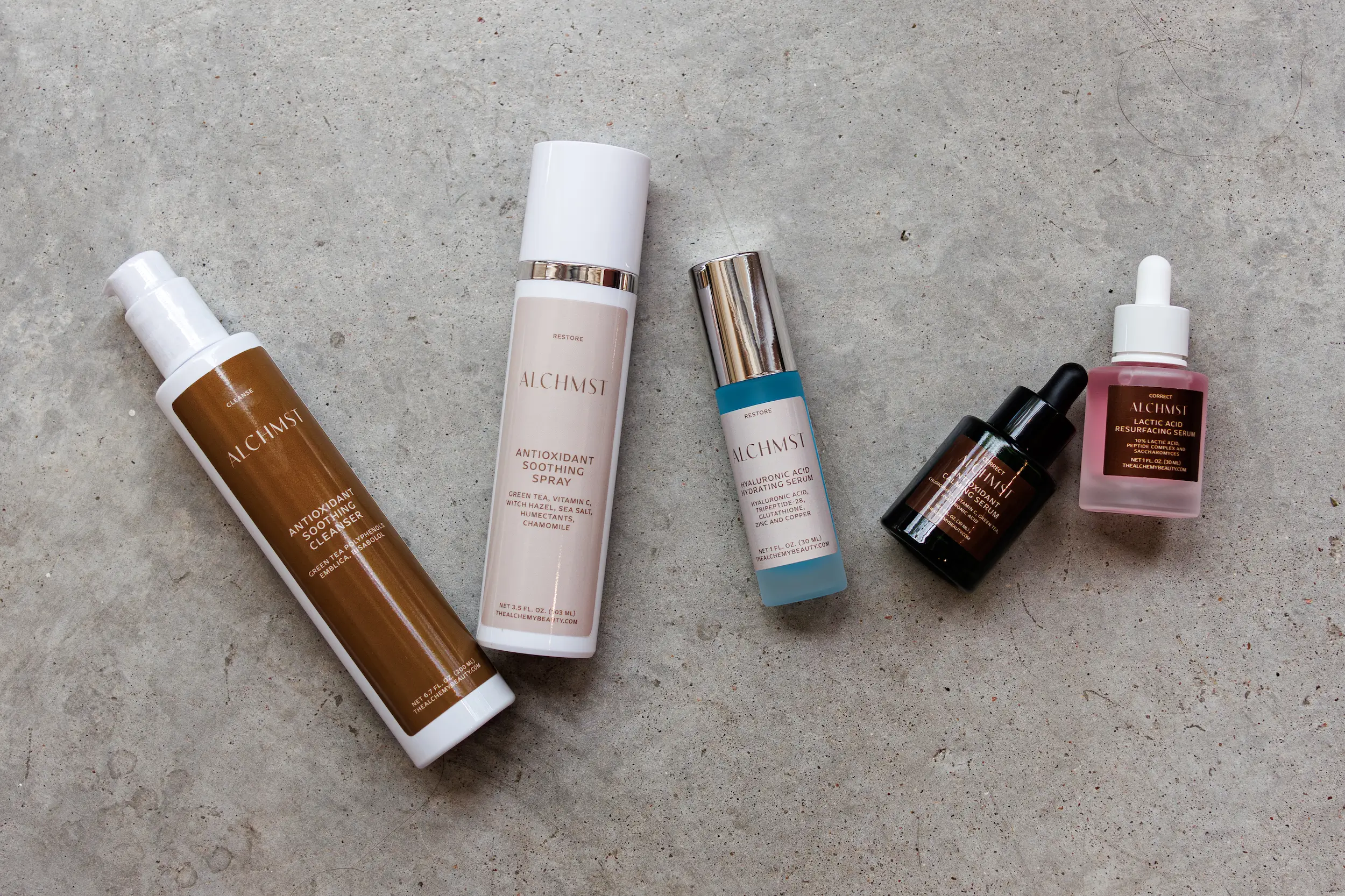
ALCHMST Even Tone Brightening Pads support clarity and radiance using kojic acid, arbutin, and bearberry, paired with antioxidants to improve pigment and texture while keeping routines simple.
2. Ingredient Concentrations Are Chosen for Results
Many retail products include trending ingredients at very low levels. Enough to list on the label, but not always enough to create meaningful change.
Pharmaceutical-grade skincare uses purposeful concentrations, supportive ingredients to improve tolerance, and intentional pairing logic.
Skin responds to chemistry and consistency, not hype.
ALCHMST Vitamin C Brightening Serum features a 20 percent vitamin C complex supported by antioxidants for stability, defense, and visible brightening.
3. Smarter Delivery Reduces Irritation
Many people abandon active skincare because of irritation caused by overly aggressive formulas or poor layering.
Medical-grade skincare often uses advanced delivery systems that allow actives to work effectively while supporting comfort and long-term compliance.
ALCHMST Retinol Renewing Serum uses pure retinol in a time-release transdermal delivery system to maximize benefits while reducing irritation.
4. Barrier Health Is a Core Priority
A compromised skin barrier can worsen nearly every concern, including redness, dehydration, breakouts, sensitivity, and delayed healing after treatments.
Pharmaceutical-grade skincare treats barrier health as the foundation, not an afterthought. When the barrier is supported, texture improves, tolerance increases, and professional results last longer.
ALCHMST Barrier Replenishing Cream uses a blend of squalane, cholesterol, ceramides, peptides, and antioxidants to support elasticity, comfort, and recovery.
5. Stability and Packaging Protect Performance
Even the best ingredients lose effectiveness in unstable formulations or poor packaging.
Medical-grade skincare is developed with stability and packaging in mind so products perform consistently from the first use to the last.
ALCHMST Radiance Drops SPF 50 combines broad-spectrum sun protection with antioxidants, making daily prevention a core part of skin longevity.
6. Fewer Products, Better Results
Most people do not under-invest in skincare. They over-invest in products that conflict, overlap, or fail to address their actual needs.
Pharmaceutical-grade skincare paired with expert guidance typically results in fewer products, better sequencing, less irritation, and clearer progress.
How Medical-Grade Skincare Fits the Alchemy Philosophy
Alchemy Beauty is rooted in the belief that confidence grows when you feel like your most authentic self. That means prioritizing results that look natural, healthy, and refined.
Skincare is essential to that approach because it:
- Supports long-term skin health
- Maintains and extends in-office results
- Strengthens the skin for better treatment outcomes
- Creates routines that are sustainable and effective
Your at-home skincare routine is the daily practice that keeps momentum going between professional treatments.
Where to Start With Pharmaceutical-Grade Skincare
Instead of chasing complicated routines, focus on foundational categories.
A strong skincare routine includes:
- A gentle, non-stripping cleanser
- One to two targeted active products
- A barrier-supporting moisturizer
- Daily SPF, every morning
Then customize based on your primary concern:
- Sensitivity and redness: Antioxidants and barrier-first hydration
- Acne and congestion: Targeted exfoliation with consistent sun protection
- Pigment and uneven tone: Brightening actives paired with rigorous SPF
- Visible aging and texture: Retinoids, antioxidants, and barrier support
The best routine is the one you can follow consistently.
How to Purchase ALCHMST Skincare
ALCHMST skincare is available directly through Alchemy Beauty in Austin.
You can purchase in clinic with guidance from our team or schedule a skincare consultation for a fully personalized regimen.
If you are already an Alchemy client, ask us at your next appointment to review your current routine and refine it with ALCHMST essentials.
The Bottom Line
Pharmaceutical-grade skincare is not about luxury or trends. It is about intention. Clinically supported ingredients, stable formulations, intelligent delivery systems, and professional guidance all working together to support real skin change.
ALCHMST was created to remove guesswork and help you build a routine that works.
Visit Alchemy Beauty in Austin to create a skincare plan designed around your skin, your treatments, and your long-term goals.